Why It’s Imperative to Transition to PCR Pallet Wrap
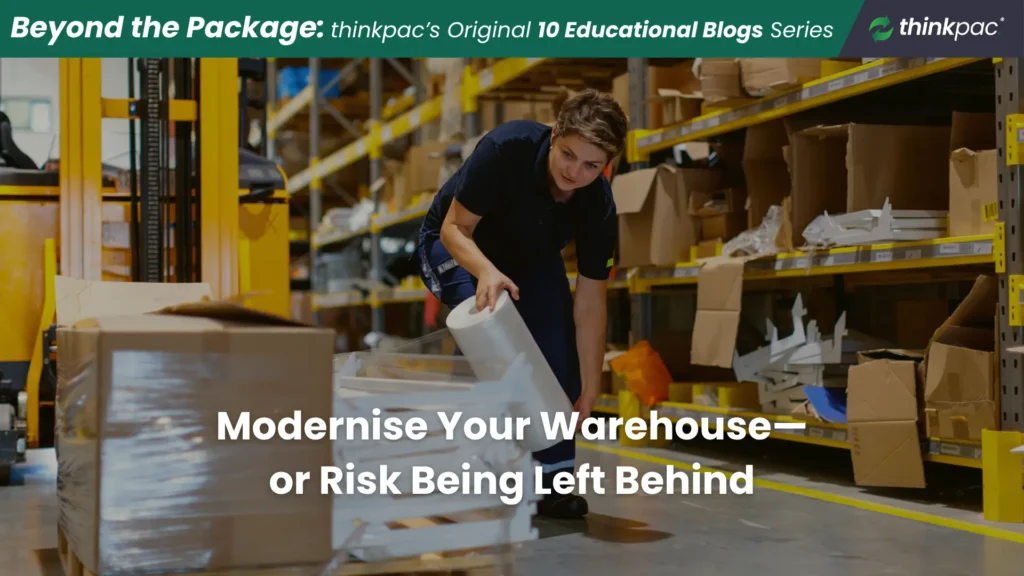
Although many facilities embrace energy-efficient lighting retrofits and sophisticated inventory management systems, one of the most potent avenues to mitigate environmental impact, curb plastic pollution, and attain sustainability goals remains vastly underappreciated: the humble pallet wrap.
At thinkpac, we contend that it’s high time to reevaluate your packaging practices, not merely for operational performance, but to generate a truly positive impact on the planet. Embracing post-consumer recycled (PCR)stretch film delivers quantifiable benefits—for your bottom line, your corporate supply chain reputation, and your environmental footprint. Herein, we explain why opting for recycled pallet wrap is the next strategic leap for forward-thinking wholesalers and distribution partners.
🧃 The Predicament: Millions of Kilograms of Virgin Plastic—Discarded After a Single Use
Annually, Australia’s warehouses and distribution centres consume thousands of tonnes of single-use plastic packaging—predominantly manufactured from virgin plastic sourced from nonrenewable raw materials. The repercussions are severe:
High level of Waste Stream. Traditional palletstretch film frequently becomes used packaging destined for landfill, exacerbating the global waste crisis.
Escalated Emissions. Production of virgin materials for plastic film requires vast energy inputs, significantly inflating an organisation’s carbon footprint.
Absence of Circularity. A linear “make–use–discard” model for plastic packaging undermines any credible pursuit of a circular economy.
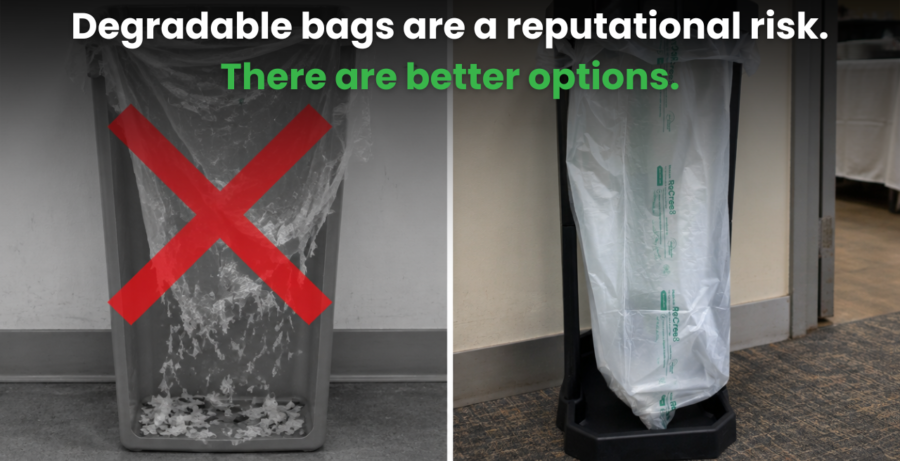
While certain plastic wraps purport to be “recyclable” or “eco-friendly,” many lack verifiable recycled content or adequate transparency in their sustainability claims—amounting to little more than greenwashing. In reality, these so-called “eco-friendly” alternatives frequently fail through the recycling process, rendering them virtually as harmful as unverified counterparts.
♻️ The Solution: PCR Pallet Wrap by thinkpac
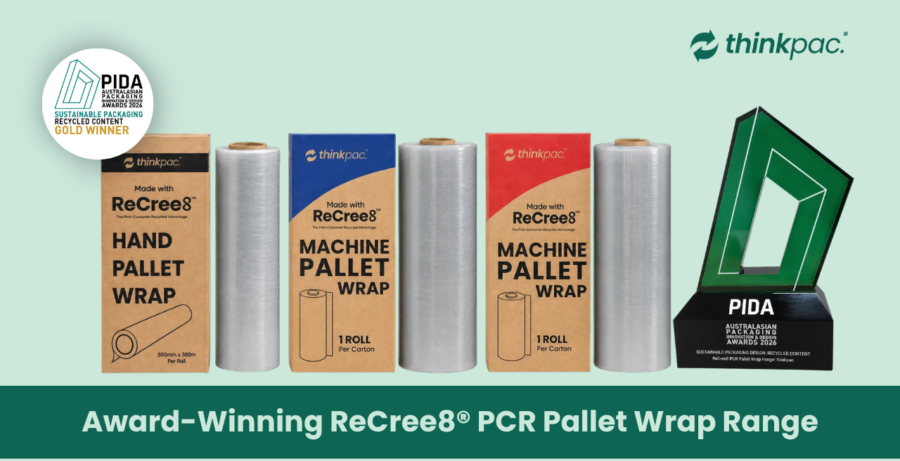
Our PCR packaging solution leverages post-consumer recycled content—plastic that has completed its first life in households or businesses, rather than mere industrial offcuts. Every roll of thinkpac PCR pallet wrap boasts a minimum of 50% verifiable PCR content, certified under our proprietary ReCree8® program.
Distinguishing Attributes:
Verified PCR Content. At least half of each roll comprises post-consumer recycled materials, sourced from certified collection and recycling programs.
GRS-Certified Resin. Third-party accreditation guarantees that “50% PCR” isn’t just marketing jargon but a documented reality.
High-Performance Durability. Engineered to match—or surpass—the tensile strength and puncture resistance of virgin plastic wraps, preserving load integrity.
Seamless Machine Compatibility. Whether you utilize a standard pallet wrapping machine or manual pallet wrapper techniques, no equipment modifications are necessary.
Full Traceability & Transparency. Detailed sustainability reports document pcr content, carbon footprint calculations, and environmental benefits—facilitating audits and bolstering stakeholder confidence.
By integrating PCR plastics into your warehouse packaging material repertoire, you’re not just procuring an ordinary packaging product; you are championing a genuinely circular economy–oriented packaging solution.
🔍 The Tangible Impact of Adopting PCR Pallet Wrap
Adopting verified PCR pallet wrap transcends public relations—it tangibly enhances operational efficiency and ESG metrics. Consider the stark contrasts between virgin pallet wrap and thinkpac’s PCR wrap:
Environmental Advantages
Carbon Emissions Reduction. Life-cycle analyses reveal up to a 70% decrease in emissions when utilizing recycled plastic relative to virgin materials.
Diminished Fossil Fuel Dependence. Whereas traditional pallet wrap relies exclusively on nonrenewable feedstocks, PCR packaging minimizes reliance on petroleum-based raw material.
Embracing Circularity. Instead of perpetuating waste to landfill, thinkpac’s recycled stretch film contributes to a closed-loop waste reduction strategy: reclaim, reprocess, reuse.
Business Advantages
Elevated Brand Perception. Differentiating your organisation as a sustainability champion —providing eco-friendly packaging, rather than continuing with outdated plastic film.
Facilitated Compliance. Comprehensive documentation simplifies conformance with government mandates, corporate sustainability goals, and customer-driven plastic-reduction targets.
Cost-Efficiency Through Waste Management. By participating in dedicated recycling programs, many clients negotiate reduced disposal fees, improving total cost of ownership.
Expanded Product Portfolio. Offering bespoke packaging and new products—such as food packaging lines incorporating PCR plastics—captures demand from discerning, eco-conscious clientele.
🧠 Why Many Warehouse Buyers Persist with Virgin Wrap
In numerous organisations, pallet wrap remains a commodity item—driven by procurement’s emphasis on lowest upfront cost and supply-chain convenience. Common misconceptions include:
“PCR wrap can’t match performance.” Contrarily, side-by-side testing often demonstrates that recycled content wrap exhibits equivalent durability, puncture resistance, and load containment compared to virgin plastic.
“Cost savings are negligible.” When accounting for avoided landfill surcharges, improved ESG KPIs, and potential subsidies for sustainable packaging, the overall lifecycle expense often favors pcr packaging.
“Incorporating PCR demands system overhauls.” On the contrary, our PCR pallet wrap integrates seamlessly with existing pallet wrapping machines and manual wrapping pallets by hand operations—requiring minimal changeover.
Specification Sheets for Procurement. Concise summaries for approval committees, expediting decision-making.
Comprehensive Sustainability Reports. Third-party certifications, impact calculation on the benefits of switching to a PCR pallet stretch film including carbon, water and energy savings/reductions, and information on broader environmental benefits.
Armed with this robust data, internal stakeholders can confidently champion the transition to recycled pallet wrap.
🔄 From Procurement to Progress: A Paradigm Shift in Pallet Wrapping
By supplanting your conventional plastic film wrap with thinkpac’s PCR materials, your warehouse can:
Instantly Curtail Scope 3 Emissions. Transitioning to pcr packaging dramatically lowers indirect emissions associated with purchased packaging materials.
Model True Circularity. Embrace a “recover–recycleremelt–rewrap” ethos, rather than irreversibly depositing used packaging in the waste stream.
Elevate Your Corporate Citizenship. Position your organisation as a champion of sustainable packaging solutions—appealing to environmentally conscious partners.
And critically, this evolution doesn’t necessitate retraining staff or investing in novel equipment. It’s a plug-and-play alternative to traditionalvirgin materials with outsized advantages.
You need not overhaul every facet of your operation to realize meaningful progress. Often, the most unassuming modifications—such as adopting PCR pallet wrap—unlock the greatest latent potential for waste reduction and environmental impact mitigation. If your warehouse still clings to virgin pallet wrap, consider:
**Are we truly wrapping the future with sustainable, reusable, recyclable solutions, or ensnaring ourselves in the linear past?
✅ Ready to Embrace PCR Pallet Wrap?
Seize the opportunity to augment your packaging strategy with verifiable, high-performance pcr content solutions. Here’s how:
Forge a positive impact on your sustainability goals today—because tomorrow’s supply chains must be anchored in recycled materials, not virgin materials.