
Sustainability / Waste Management
Compostable Dog Waste Bags Australia: Why the Claim Can Fail
When people search for compostable dog waste bags Australia, the environmental promise sounds simple. A compostable bag should break down and create less environmental impact than conventional plastic.
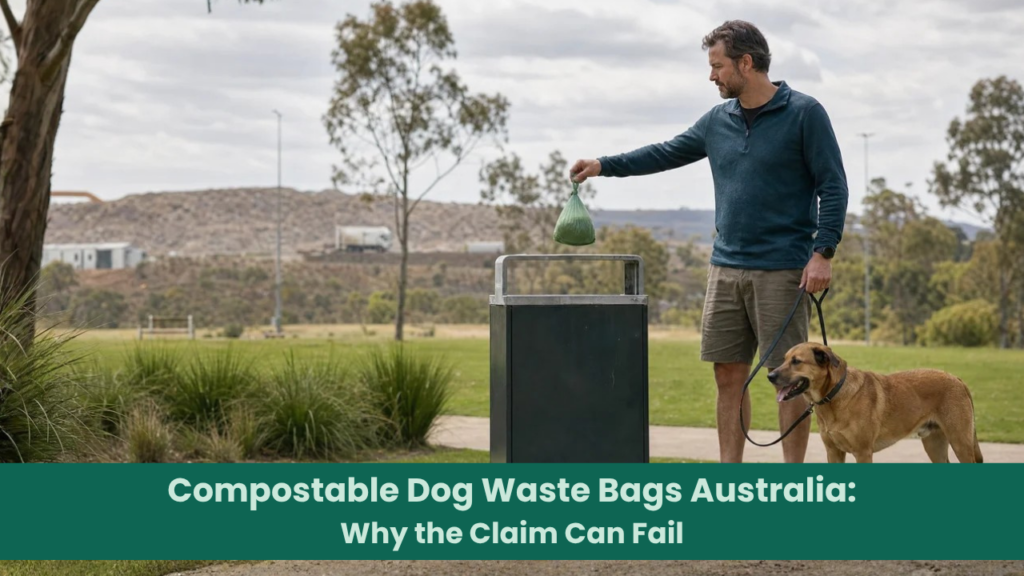
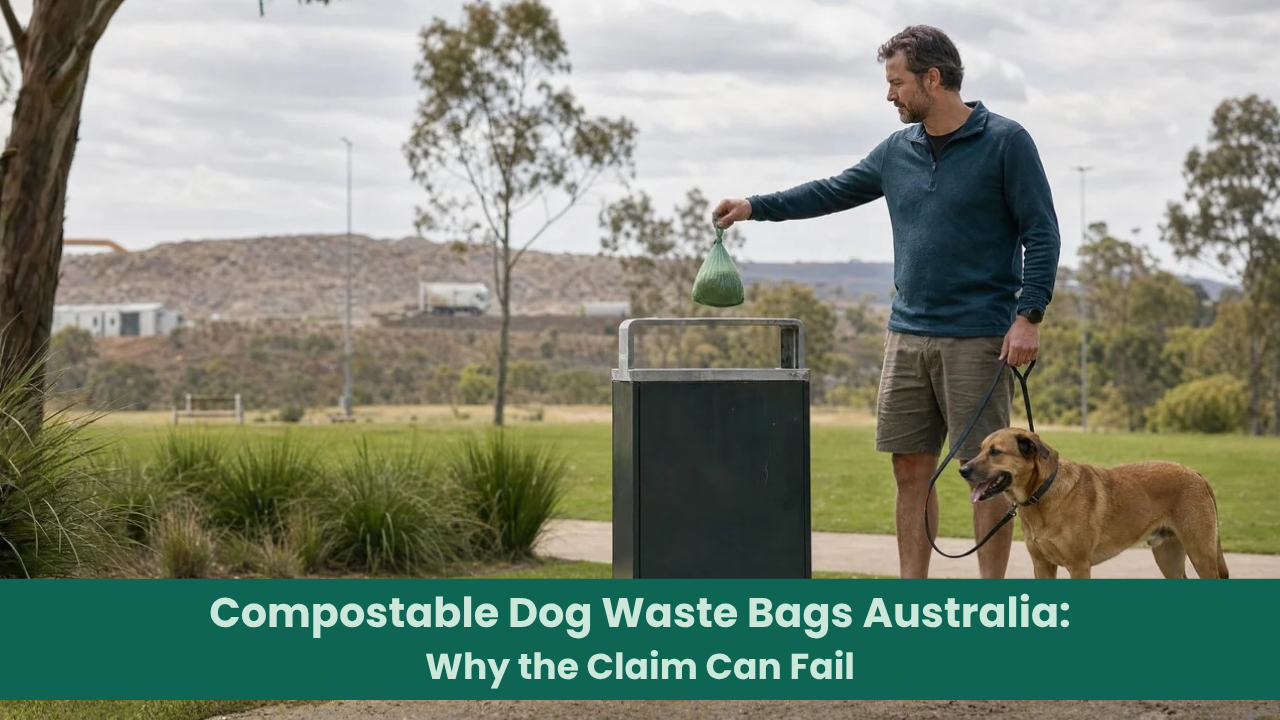
Last week, during a trip to Cairns, I came across a compostable dog waste bag dispenser. At first glance, it looked like a sustainability win. The problem is what happens after the bag is used.
This isn’t a criticism of businesses buying these products. Most are trying to make a responsible choice. The issue is whether Australia’s waste infrastructure can deliver the composting outcome being promised.
Do compostable dog waste bags actually get composted?
Compostable and biodegradable materials carry an appealing promise. They are designed to break down under specific composting conditions. However, those conditions matter.
A compostable bag needs to reach an appropriate composting system. If it goes into general waste instead, the intended composting pathway is lost.
That disposal gap is an important consideration when evaluating compostable dog waste bags Australia and their environmental claims.
Can dog waste bags go in the green FOGO bin?
Not automatically. FOGO and green-organics rules depend on the jurisdiction and local collection system.
In New South Wales, the EPA specifically excludes pet poo and poo bags from FO and FOGO bins. This applies whether or not the bag is marketed as compostable.
The NSW EPA says potential pathogen sources such as pet poo, pet litter and poo bags should instead go into the red general-waste bin.
Read the NSW EPA guidance on what can and cannot go in FOGO.
For other Australian locations, businesses and households should check the requirements of their council or waste service before disposing of pet waste in an organics collection.
What happens to a compostable bag in landfill?
A compostable product sent to landfill is not experiencing the same conditions as a managed aerobic composting facility.
Organic materials can decompose in landfill and contribute to landfill gas, including methane. This is one reason keeping suitable organic material out of landfill is an important part of waste management.
The Australian Government provides more information about organic waste recovery and landfill impacts through the Department of Climate Change, Energy, the Environment and Water.
Read the Australian Government guidance on recovering organic waste.
The alternative: recycled content instead of a compostability claim
If a used dog waste bag is destined for general waste, another question becomes important: what material was used to manufacture it?
Post-consumer recycled plastic, or PCR, reduces the amount of virgin plastic required to manufacture a new bag. That benefit occurs during production and does not depend on the consumer finding a suitable composting facility afterward.
For buyers comparing compostable dog waste bags Australia with recycled-content alternatives, this distinction matters.
It is a more specific environmental claim than simply saying “compostable”, but it can also be easier to substantiate.
Key Takeaways
- Compostable bags require suitable composting conditions to deliver their intended end-of-life benefit.
- NSW EPA excludes pet poo and poo bags from FO and FOGO collections because of contamination and pathogen concerns.
- FOGO rules can vary between jurisdictions, so local council requirements should always be checked.
- PCR plastic reduces demand for virgin plastic without relying on a future composting pathway.
“A compostable product only delivers its intended end-of-life benefit when it reaches the conditions it was designed to compost in.”
In Development
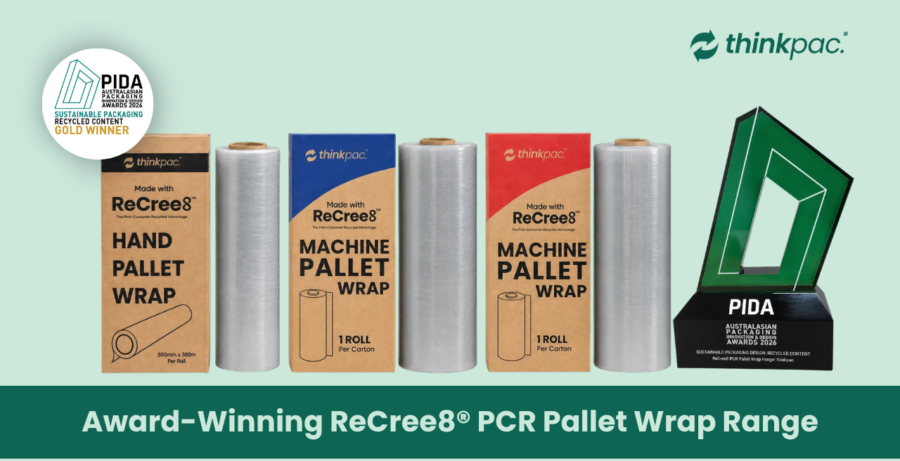
thinkpac created and manufactures ReCree8, our proprietary PCR resin platform — GECA Verified, GRS Certified, and RecyClass certified at the resin and facility level. It already runs across our clear bag, heavy-duty hospitality liner, and pallet wrap ranges.
We’ve built samples and working prototypes of a PCR dog waste bag using the ReCree8 platform. We’re not launching it as a catalogue product yet — final gauge, roll format, and dispenser specification are still open, and we’d rather build those in partnership with the distributors and councils who’ll actually be selling and stocking it than lock a spec in isolation.
If you’re comparing compostable dog waste bags Australia with recycled-content alternatives, we’d be happy to discuss the options.
This is particularly relevant for distributors supplying councils, parks, body corporates and pet retailers.
We’ll walk you through the ReCree8® dog waste bag prototypes and discuss where the final specification remains flexible.
Certifications noted above apply to the ReCree8® resin and manufacturing facility, not to any finished dog waste bag product claim.
Frequently Asked Questions
Compostable Dog Waste Bags Australia FAQs
Are compostable dog poop bags better for the environment in Australia?
Their environmental benefit depends heavily on disposal. A compostable bag needs to reach suitable composting conditions to perform as intended. If it is placed in general waste, that composting pathway is unavailable.
Can I put a compostable dog waste bag in my council green bin?
Check your local council rules. In NSW, the EPA specifically excludes pet poo and poo bags from FO and FOGO bins, including compostable poo bags.
Why is pet waste excluded from some FOGO systems?
One concern is contamination from pathogens in pet waste. The NSW EPA says viruses and intestinal worm eggs are not always eliminated during composting, so pet poo and poo bags are excluded from its FO and FOGO streams.
Can compostable material produce methane in landfill?
Biodegradable organic material can contribute to methane generation when it decomposes under landfill conditions. Landfill gas management can capture some of these emissions, but landfill is not the same process as aerobic composting.
What’s an alternative to compostable dog waste bags?
One option is a bag containing post-consumer recycled plastic. PCR reduces demand for virgin plastic during manufacturing, so its recycled-content benefit does not depend on a composting pathway after use.
Is thinkpac’s PCR dog waste bag available now?
Not yet. Samples and prototypes have been developed using the ReCree8® resin platform. The final gauge, roll format and dispenser dimensions are still being refined with potential distributors and users.