

Circular Packaging Update
2025 National Packaging Targets: Where Do We Go From Here?
The National Packaging Targets show why Australia needs stronger plastic recovery, more recycled-content demand and better circular packaging action.
Recyclability matters, but businesses also need to create demand for products made from recovered plastic.

National Packaging Targets and Australia’s Plastic Recovery Challenge
The National Packaging Targets have placed recyclability and recycled content in the spotlight. They also show that Australia still has a major gap to close.
Recent APCO reports show some progress. However, plastic packaging recovery remains a key challenge for the industry.
Therefore, businesses need to move beyond simple claims and support real circular packaging systems.
Where We Are With the National Packaging Targets
The latest reporting shows that Australia is not on track to meet the 2025 targets if the system keeps moving at the same pace.
Plastics have one of the lowest recovery rates among post-consumer packaging material groups. This means too much valuable material still leaves the circular economy.
As a result, the industry needs more recovery, stronger recycled-content demand and better collaboration.
Key Packaging Recovery Takeaways
These points matter for brand owners, retailers, suppliers and packaging buyers.
Targets need action
Australia needs stronger action to improve packaging recovery rates.
Plastics need focus
Plastic packaging remains a difficult material stream to recover at scale.
Demand matters
Recovered material needs buyers to create a working circular system.
Why Recyclability Alone Is Not Enough
Recyclability is important, but it does not guarantee that packaging will actually be recycled.
Packaging also needs collection systems, sorting infrastructure, recycling capacity and demand for recycled materials.
In short, a recyclable product still needs a full system behind it.
Where Do We Go From Here?
Some businesses may treat plastic as a problem that is too hard to solve. Because of this, they may choose to ban or remove soft plastics from the supply chain.
However, soft plastics still serve many useful commercial roles. They protect goods, support logistics and help reduce product damage.
The better path is to make soft plastics more circular, not simply cancel them without a suitable replacement.
Why Banning Soft Plastic Is Not Always the Answer
Soft plastic products have many commercial uses that may not be obvious to the public.
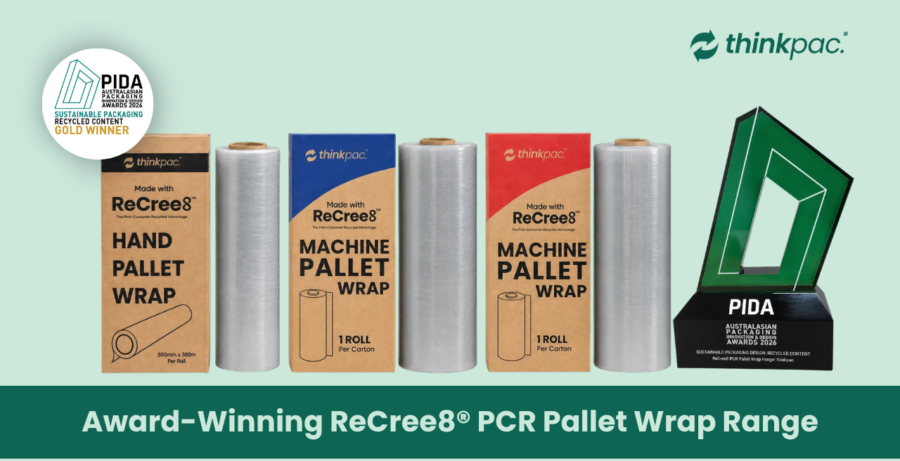
For example, pallet wrap can protect goods during transport. Liners can help manage waste safely. Flexible packaging can also reduce product damage.
Therefore, the solution needs to balance function, recovery and recycled-content demand.
Circular Packaging for Soft Plastics
With the right programs and collaboration, soft plastics can stay in circular packaging systems.
This requires brand owners, suppliers, recyclers and buyers to work together across the full supply chain.
Learn more about thinkpac’s soft plastic recycling approach.
Thinkpac’s Role in the Circular Economy
Thinkpac has recycled soft plastic into high-quality feedstock for manufacturing for many years.
Because of this experience, we believe we are well placed to help lead circular packaging for soft plastics.
Our goal is to help businesses use recycled-content packaging that supports practical performance and better environmental outcomes.
What Businesses Can Do Next
Businesses can support the targets by taking practical steps now.
Audit packaging
Review where your business uses soft plastics and why.
Buy recycled
Choose products made with verified recycled content.
Ask for proof
Request documentation, recycled content details and traceability.
Learn More About Packaging Recovery
For packaging sustainability action in Australia, visit the Australian Packaging Covenant Organisation.
For recycling and resource recovery advocacy, visit the Australian Council of Recycling.
You can also learn about circular economy principles through the Ellen MacArthur Foundation.
Final Thoughts: The Targets Need Action, Not Delay
The National Packaging Targets show that Australia needs stronger circular packaging action.
Banning soft plastic may sound simple, but it does not solve every supply chain need.
Instead, businesses should improve recovery, support recycled-content products and help build real demand for recovered material.
Move toward circular packaging
Talk to Thinkpac About Sustainable Packaging
Contact the thinkpac team to explore circular packaging solutions that support recycled content, recovery goals and practical business use.