Packaging Compliance Australia 2026: What Procurement Teams Need to Know
Packaging compliance in Australia is becoming more complex for businesses that buy or specify soft plastic packaging. This includes common consumables such as bin liners, pallet wrap, clinical waste bags and other soft plastic packaging products.
Three major changes now affect procurement teams, brand owners, retailers and distributors. These changes relate to mandatory Scope 3 reporting, ACCC greenwashing enforcement and the phase-out of oxo-degradable plastics.
For procurement teams, packaging compliance is no longer only a sustainability issue. It is now a supplier risk, reporting and legal compliance issue.
1. Mandatory Scope 3 Reporting Is Now Law for Large Australian Corporates
Australia’s mandatory climate-related financial disclosure regime requires large corporates to report supply chain emissions. This includes Scope 3 emissions, which cover the environmental impact of purchased goods and services.
For packaging suppliers, this matters because packaging is part of a customer’s supply chain footprint. Buyers increasingly need verified data about recycled content, carbon impact and chain of custody.
What is Scope 3?
Scope 3 covers emissions that occur across a company’s value chain but are not directly controlled by that company. This includes the environmental footprint of purchased packaging, materials and supplier services.
Scope 3 reporting timeline in Australia
| Group | Who is affected | Reporting start |
|---|---|---|
| Group 1 | Large listed entities and major financial institutions | 1 January 2025 |
| Group 2 | Mid-to-large corporates | 1 July 2026 |
| Group 3 | Smaller reporting entities | 1 July 2027 |
The practical consequence is clear. Enterprise buyers cannot allow blind spots in their packaging supply chain. They need structured, repeatable and audit-ready environmental data from suppliers.
Suppliers that cannot provide verified recycled content percentages, carbon data and chain-of-custody documentation may become harder to approve for preferred supplier panels.
The data your customers need from you is now linked to regulated financial disclosure requirements on their end.
2. The ACCC Is Raising the Standard for Recycled Content Claims
The ACCC has made greenwashing enforcement a major priority. For packaging suppliers, this means recycled content claims must be supported by credible evidence.
Packaging claims can no longer rely only on self-declared statements. Buyers need independent verification that supports marketing claims, tender submissions and sustainability reporting.
What makes a recycled content claim defensible?
GECA
GECA provides independent Claims Authentication for recycled content and other environmental claims under ISO 14021.
GRS
The Global Recycled Standard supports verification of recycled material, supply chain controls and environmental processing requirements.
RecyClass
RecyClass supports plastic packaging traceability and recyclability claims, helping strengthen evidence for recycled content and material design.
Self-declared “recycled” labelling is no longer a strong commercial position for packaging compliance in Australia.
3. Oxo-Degradable Plastics Are Being Phased Out
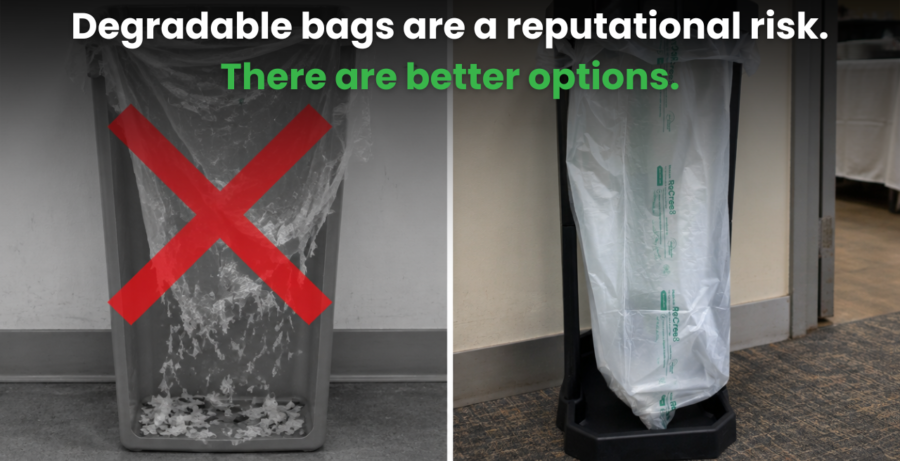
Oxo-degradable plastics contain additives that cause plastic to fragment under heat or UV exposure. However, these materials do not safely biodegrade. Instead, they can break down into microplastics.
As packaging regulations tighten across Australia, oxo-degradable plastics are becoming a growing compliance risk for suppliers, distributors and retailers.
Why this creates inventory risk
Different states and territories are moving at different speeds. A packaging product that is acceptable in one state may become non-compliant in another. This creates risk for national supply chains that cannot easily manage different packaging formats by state.
To reduce compliance risk, Australian businesses should review their packaging portfolio now and move towards verified recycled content, recyclable materials and packaging formats that align with circular economy principles.
What a Compliant Packaging Position Looks Like in 2026
Procurement and waste management teams should look for packaging suppliers that can provide:
- Verified recycled content supported by recognised certification or authentication
- ISO-aligned data for sustainability and supplier reporting
- Traceability through clear supply chain documentation
- No pro-degradant additives that create future compliance risk
How ReCree8® PCR Packaging Supports Compliance
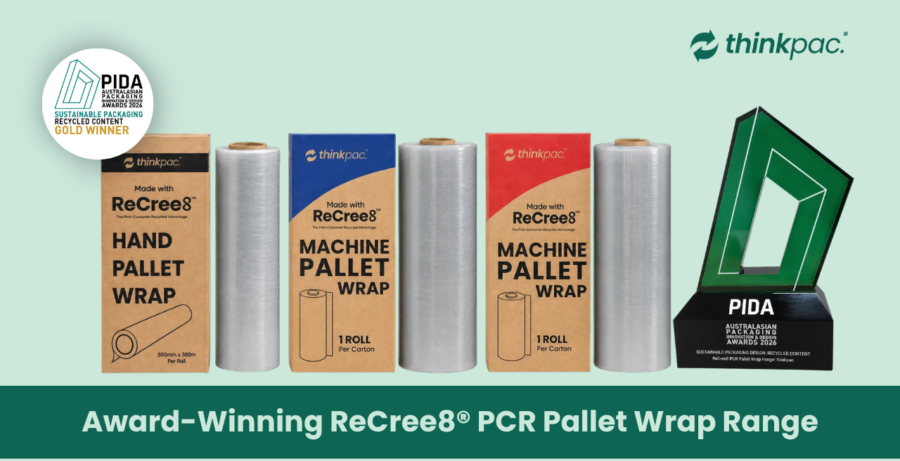
thinkpac’s ReCree8® PCR packaging range uses 100% post-consumer recycled resin. The range is designed to help Australian businesses reduce reliance on virgin plastic while supporting stronger packaging compliance.
ReCree8® supports procurement teams that need verified recycled content, supplier documentation and packaging data for tenders, ESG reporting and Scope 3 supplier assessments.
ReCree8® helps procurement teams move from broad sustainability claims to evidence-backed packaging decisions.
Two Practical Steps Before Your Next Tender or ESG Report
1. Use the ReCree8® Impact Calculator
Estimate your annual soft plastic packaging footprint and generate useful data for environmental reporting and procurement reviews.
2. Request the ReCree8® Technical Proof Pack
Request documentation for procurement officers, sustainability leads and ESG managers. This can support tender submissions, supplier reviews and internal reporting.
Frequently Asked Questions
Is mandatory Scope 3 reporting already in effect in Australia?
Yes. Group 1 entities began reporting from 1 January 2025. Group 2 entities enter the regime from 1 July 2026, followed by Group 3 entities from 1 July 2027.
What is the ACCC’s position on recycled content claims?
The ACCC expects environmental claims to be accurate, clear and supported by evidence. For recycled content claims, independent verification helps reduce greenwashing risk.
Are oxo-degradable bin liners still legal in Australia?
Rules vary by state and territory, but oxo-degradable plastics are being phased out. National distributors should review packaging portfolios now to reduce future compliance risk.
What is GECA Claims Authentication?
GECA Claims Authentication independently verifies specific environmental claims, including recycled content claims, under ISO 14021.
What is PCR plastic?
PCR stands for post-consumer recycled plastic. It is made from plastic waste that has already been used, collected, processed and reused in new plastic products.