
Sustainable Packaging
Why Packaging Should Be Part of Your Climate Action Plan
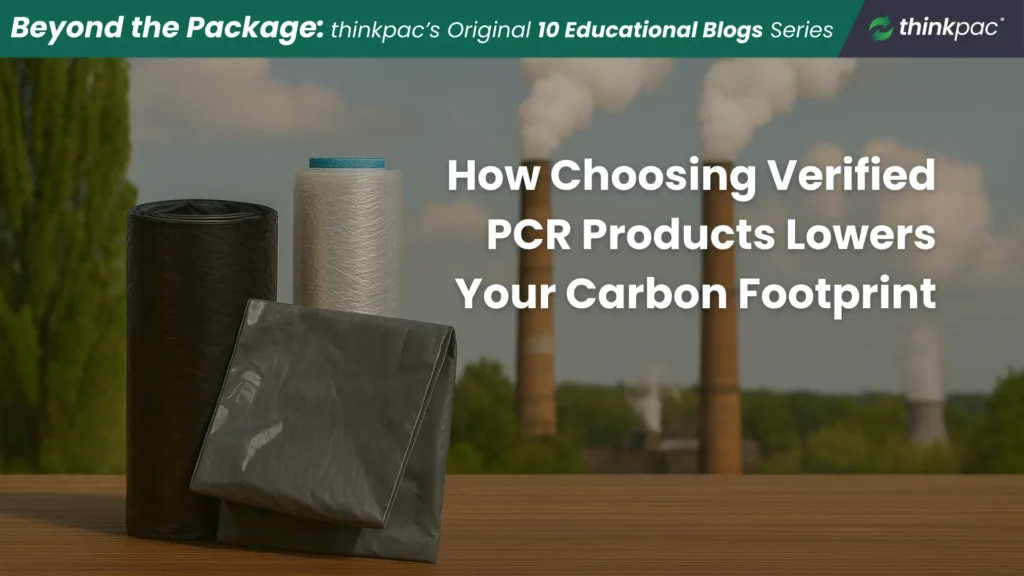
Packaging should be part of your climate action plan because every bin liner, pallet wrap and packing supply has a carbon footprint before it reaches your business.
Packaging and Your Climate Action Plan
Many businesses focus on renewable energy, transport routes and product design when reducing emissions. However, packaging is often overlooked, even though it is used every day across warehouses, distribution centres and commercial operations.
By switching to verified post-consumer recycled packaging, businesses can reduce virgin plastic use, cut greenhouse gas emissions and improve supply chain transparency.
Using verified PCR packaging can reduce emissions, improve product life cycle performance and build trust with customers, partners and procurement teams.
The Carbon Problem with Virgin Plastic Packaging
Most commercial packaging is still made from virgin plastic. This includes many LDPE pallet wraps, bin liners and flexible packaging products used in warehouses and distribution.
Virgin plastic is made from fossil-based raw materials. As a result, it carries a significant carbon footprint before it is even used.
High Energy Use
Producing virgin LDPE requires large amounts of energy and can generate around 1.8 to 2.0 kg CO₂e per kilogram.
Transport Emissions
Long-distance movement of raw materials and finished packaging can add more emissions across the supply chain.
Fossil Fuel Reliance
Virgin plastic depends on oil-based resources, making it harder for businesses to reduce fossil fuel use.
For businesses with climate targets, this means packaging can become a hidden source of emissions if it is not included in sustainability planning.
The PCR Packaging Advantage
Post-consumer recycled packaging, also known as PCR packaging, is made from plastic waste that has already been used, collected, cleaned and recycled.
Instead of relying only on new fossil-based plastic, PCR packaging gives existing plastic material a second life. This helps reduce waste and supports a more circular packaging model.
Less Waste
PCR packaging helps divert used plastic from landfill or incineration.
Lower Emissions
Recycled plastic production can use less energy than virgin plastic production.
Better Traceability
Verified PCR packaging supports stronger sustainability reporting and procurement decisions.
This makes PCR packaging a practical tool for companies that want measurable climate action without compromising product performance.
PCR vs Virgin Plastic: Carbon Footprint
The table below shows how PCR LDPE packaging can compare with virgin LDPE packaging from a carbon footprint perspective.
| Packaging Type | Description | Carbon Footprint |
|---|---|---|
| Virgin LDPE Plastic | Made from oil-based raw materials | Around 1.8 to 2.0 kg CO₂e per kg |
| PCR LDPE Plastic | Made from recycled post-consumer plastic | Around 0.4 to 0.9 kg CO₂e per kg |
| Reduction | Depends on region, material and facility | Up to 70% fewer emissions |
Actual results depend on material source, recycling process, transport distance and production method. thinkpac’s ReCree8® data is verified using ISO-aligned methodologies.
Beyond Carbon: Extra Benefits of PCR Packaging
Switching to verified PCR packaging does more than reduce emissions. It also helps businesses improve procurement, reporting and customer confidence.
ESG Reporting Support
Verified packaging data can help businesses report Scope 3 emissions and show practical sustainability progress.
Regulatory Alignment
PCR packaging can support alignment with stronger packaging and plastics policies in Australia and overseas.
Trust and Transparency
Certification and impact data help reduce greenwashing risk and support credible environmental claims.
Supply Chain Visibility
Chain-of-custody records help prove where recycled materials come from and how they are used.
For wholesalers and distributors, these benefits can support tenders, customer conversations and long-term sustainability planning.
Case Example: A Warehouse’s Annual Savings
Imagine a mid-size warehouse that uses 500 rolls of pallet wrap each month. Each roll weighs 5 kg.
Total plastic used per year: 500 × 5 kg × 12 = 30,000 kg
Virgin plastic footprint: 30,000 × 1.9 = 57,000 kg CO₂e
PCR plastic footprint: 30,000 × 0.7 = 21,000 kg CO₂e
Estimated annual saving: around 36,000 kg CO₂e
That is around 36 tonnes of carbon emissions avoided in one year. Across multiple sites and product ranges, these savings can grow significantly.
Packaging as a Climate Tool
Every roll of wrap, bin liner and mailer has an impact. By choosing verified PCR packaging, businesses can include packaging in their climate action plan and make measurable progress.
Cut carbon emissions
Close the recycling loop
Support supply chain reporting
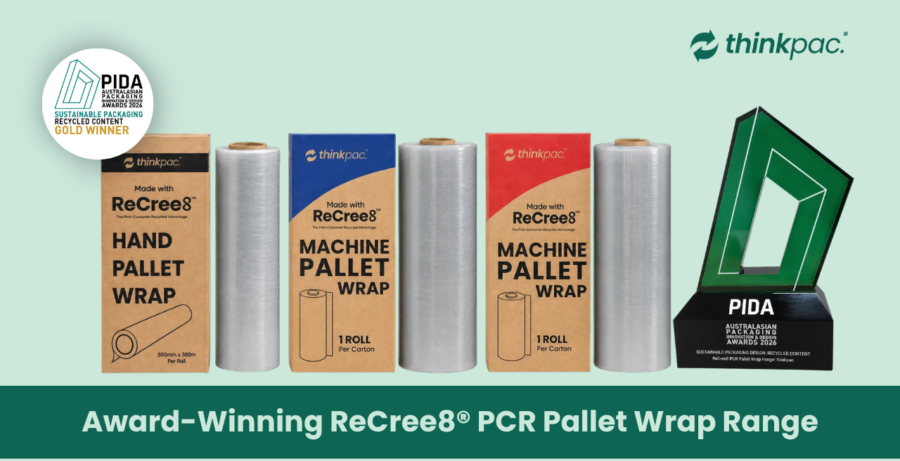
With thinkpac’s ReCree8® PCR range, businesses can access verified carbon savings, transparent supply chains and practical data for compliance and sustainability reporting.
Learn More About Sustainable Packaging
To better understand packaging sustainability in Australia, you can visit the Australian Packaging Covenant Organisation. You can also learn more about independent environmental certification through GECA.
For product support, explore ReCree8® resin, try the ReCree8® Impact Calculator, or visit our pallet wrap and industrial packaging range.
Ready to see your savings?
Calculate Your Packaging Impact
Use the ReCree8® Impact Calculator to compare emissions and see how verified PCR packaging can support your climate action plan.
You can also email info@thinkpac.com.au to discuss PCR packaging options.