
Plastic Packaging Sustainability
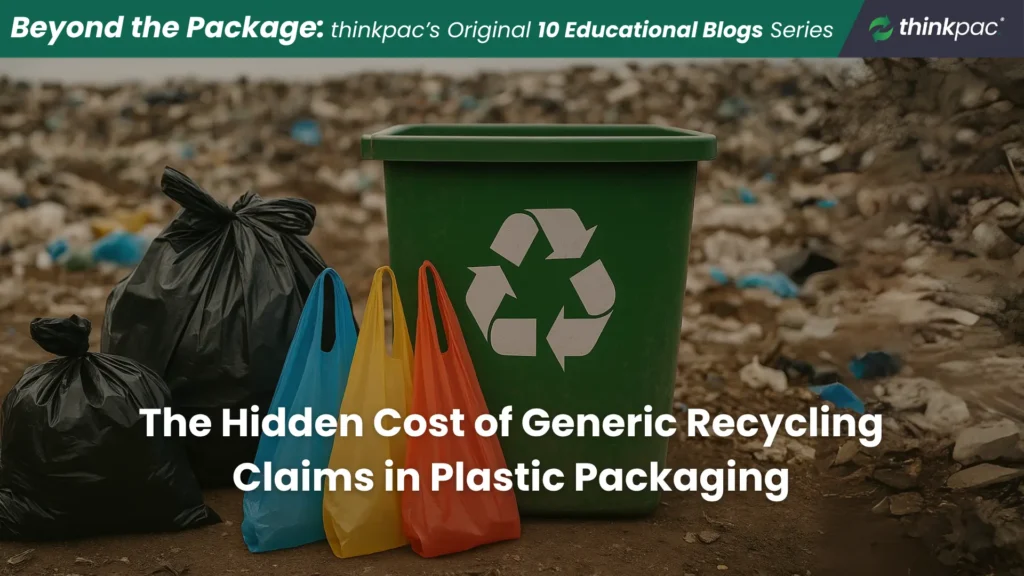
The Hidden Cost of Generic Recycling Claims in Plastic Packaging
Recycling claims in plastic packaging can sound positive, but vague terms like recyclable or made from recycled material do not always support real circularity.
In the race to go green, many businesses choose packaging based on simple environmental labels. However, not all plastic waste recycling claims are created equal. At best, unclear claims create confusion. At worst, they mislead buyers, weaken sustainability goals and increase reputational risk.
Why Generic Recycling Claims Create Problems
Plastic pollution remains one of the most urgent environmental challenges. Each year, millions of tonnes of single use packaging and plastic packaging enter the waste stream. This adds pressure to landfill, recycling systems, natural ecosystems and global supply chains.
The issue starts long before disposal. From fossil fuel based raw material extraction to plastic production, transport, use and disposal, the life cycle of plastic packaging creates environmental and economic costs. Therefore, businesses need clear data, not vague labels.
The circular economy aims to keep materials in use for longer. However, claims such as recyclable or made with recycled content can hide the true environmental impact when they do not include proof, traceability or verified post-consumer recycled content.
The Problem With Recyclable and Recycled Content Claims
Claims about recyclable plastic or recycled material can mislead buyers when the recycling process, material source and recycled percentage are unclear. As a result, businesses may believe they are choosing sustainable packaging when the actual impact is limited.
Recyclable does not guarantee recycling
Many mixed plastic items and certain plastic types cannot be processed by local Materials Recovery Facilities. Because of this, packaging marked as recyclable may still end up in landfill.
Pre-consumer and post-consumer confusion
Some recycled content claims refer to factory offcuts or production scraps. These materials can reduce manufacturing waste, but they do not address used packaging waste from consumers.
Weak verification creates greenwashing risk
Without clear standards and documentation, a product may contain only a small amount of recycled material while still carrying a broad environmental claim.
Material quality can limit circularity
Polymer quality can reduce after repeated recycling. Therefore, businesses need packaging made with quality verified recycled resin that can still perform in real conditions.
Vague labels can reduce consumer trust, slow the adoption of genuine sustainable packaging and weaken the potential of plastic recycling.
Hidden Business Costs of Generic Recycling Claims
Generic environmental claims do not only affect sustainability outcomes. They can also create financial, regulatory and supply chain risks for businesses.
Greenwashing risk
Shallow claims can damage brand trust when customers, partners or regulators question the proof behind them.
Regulatory pressure
Environmental marketing rules are becoming stricter, especially around false or unclear sustainability claims.
Supply chain blind spots
Without chain of custody and life cycle data, businesses struggle to measure Scope 3 emissions and packaging impact.
Missed circularity
Businesses that rely on vague claims may miss better opportunities to use verified recycled materials and close the loop.
Pre-Consumer vs. Post-Consumer: The Gold Standard for Circularity
Distinguishing between recycled sources is critical to achieving true circularity:

Pre-consumer recycled material
This material comes from manufacturing scraps, offcuts or production waste. It can support manufacturing efficiency, but it does not directly solve the issue of post-consumer packaging waste.
Post-consumer recycled material
This material comes from products that people or businesses have already used and discarded. It helps recover plastic waste and turn it into new packaging.
For stronger sustainability outcomes, choose products with high amounts of verified post-consumer recycled content. Ideally, packaging should include certified PCR material that reduces reliance on virgin raw material and supports higher recycling rates.
What to Look for in Verified Recycled Packaging
When reviewing sustainable packaging options, do not rely only on front of pack claims. Instead, ask for documentation, standards and proof that support the claim.
Certifications and standards
Look for GRS, RCS or equivalent certification, along with documented recycled content percentages.
Transparent data
Ask for LCA or carbon footprint data that shows the real environmental impact of the packaging.
Chain of custody
Confirm that the supplier can trace the material from collection and sorting through to the finished packaging product.
Quality and performance
Verified recycled packaging should still meet safety, strength and performance requirements for real business use.
How thinkpac Delivers Real Sustainability Impact
At thinkpac, we go beyond generic sustainability claims. Our ReCree8® program supports verified recycled resin, transparent data and practical packaging solutions that help businesses reduce virgin plastic use.
♻️
ReCree8® resins
High grade recycled plastic feedstock tested for quality and consistency.
📊
Clear reporting
Impact data that can support procurement, ESG and sustainability reports.
🔎
Traceability
Support for chain of custody from recovered plastic to final packaging.
✅
Verified claims
Packaging claims backed by documentation, not vague green language.
Aligning Recycled Packaging With Global Initiatives
Verified recycled packaging can help businesses align with global circular economy and waste reduction priorities. For broader circular economy guidance, businesses can review resources from the
Ellen MacArthur Foundation.
For Australian packaging guidance, the
Australian Packaging Covenant Organisation
provides useful information about packaging sustainability and circular design.
Businesses can also explore ReCree8® resin, try the
ReCree8® Impact Calculator, or view our
products.
Case Study: Boosting Recycled Content in FMCG Packaging
A major FMCG brand wanted to increase recycled plastic in its packaging without sacrificing performance. By switching to 50% PCR stretch film, the business created measurable sustainability improvements.
30 tonnes
Less virgin plastic used each year.
45%
Improved recycling rate for packaging.
20%
Cut in Scope 3 emissions.
78%
Consumer recognition of genuine sustainability leadership.
Final Thoughts: Move Beyond Generic Recycling Claims
In an era of rising consumer awareness and tighter regulations, generic recyclable labels are no longer enough. Businesses need proof that their packaging choices reduce waste, improve circularity and support real environmental outcomes.
To avoid greenwashing, companies should demand post-consumer verification, clear chain of custody, robust life cycle data and transparent recycled content targets.
The strongest packaging strategies do not rely on vague claims. They use verified recycled materials, accountable suppliers and circular business models that turn waste into long term value.
Next steps
Ready to Transform Your Packaging Supply Chain?
Partner with thinkpac to eliminate greenwashing from your packaging portfolio, adopt verified PCR solutions and build a more circular packaging strategy.