Sustainable packaging guide
How to Avoid Greenwashing and Choose Verified Sustainable Solutions
Greenwashing can damage trust and lead to poor procurement decisions. This guide explains how wholesalers and distributors can choose verified sustainable packaging with confidence.
Why Verified Sustainable Packaging Matters
As demand for eco-conscious packaging grows, businesses need to look beyond simple claims such as “green”, “biodegradable”, “recyclable” or “eco-friendly”. These terms can be useful, but only when they are supported by clear evidence.
For wholesalers and distribution partners, choosing verified sustainable solutions means asking better questions. It also means checking certifications, recycled content, life cycle data, recycling outcomes and ESG alignment before making purchasing decisions.
The five questions below can help you avoid greenwashing and select packaging suppliers that provide genuine environmental value.
1. What Does Biodegradable or Compostable Really Mean?
In sustainable procurement, terminology matters. When a supplier claims that packaging is biodegradable or compostable, ask what that means in practice.
Some materials may only break down in high-temperature commercial composting facilities. Others may leave behind microplastics or residues if they are not certified to the right standard.
What to ask
- Does the product meet recognised compostability standards such as AS 4736 or AS 5810?
- Does it break down into non-toxic organic matter?
- What conditions are required for decomposition?
- Is there third-party evidence to support the claim?
Red flag: vague claims such as “it breaks down naturally” without certification, testing data or clear decomposition conditions.
2. Is the Packaging Made with Genuine PCR Content?
The word “recycled” can be unclear. It may refer to post-consumer recycled material, manufacturing offcuts or other recovered plastic streams.
For a stronger circular economy outcome, ask whether the packaging contains genuine post-consumer recycled content. PCR packaging helps reduce reliance on virgin resin and gives used plastic material a second life.
What to ask
- What percentage of the final product is PCR content?
- Is the PCR content independently verified?
- Can the supplier provide a chain of custody?
- Does the supply chain support ethical and responsible sourcing?
Tip: A product with 50% verified PCR content has a very different sustainability profile from a product with only 10% recycled content.
3. Can the Supplier Prove Its Environmental Claims?
A supplier’s sustainability credibility depends on transparent data. Marketing language is not enough. You need documents, reports and independent verification.
Ask for third-party certifications, life cycle assessments and impact data that show how the product performs across carbon emissions, water use, waste diversion and end-of-life outcomes.
What to ask
- Can the supplier provide third-party certification?
- Is there a life cycle assessment or impact report?
- Can the data support ESG or Scope 3 reporting?
- Does the supplier share traceability information?
You can also refer to recognised organisations such as the Australian Packaging Covenant Organisation and GECA when assessing packaging claims.
4. Is the Packaging Compatible with Local Recycling Systems?
A product may be technically recyclable but still fail in real-world recycling systems. Local infrastructure, contamination rates and sorting capabilities all matter.
Before purchasing large volumes of soft plastic packaging, confirm whether the material can be accepted by local facilities or recovery programs.
What to ask
- Is the packaging accepted by local recycling facilities?
- Does it require special sorting technology?
- Can it be recovered through soft plastic recycling programs?
- What happens to the packaging at end of life?
Red flag: “recyclable” claims that are not supported by local council, MRF or recovery program confirmation.
5. Does the Packaging Support Your ESG Goals?
Packaging choices can affect ESG performance, procurement outcomes and corporate social responsibility targets.
A strong supplier should be able to explain how its products support your environmental reporting, waste reduction, recycled content targets and broader sustainability goals.
What to ask
- Can the supplier provide carbon savings or landfill diversion metrics?
- Can the product support ESG reporting?
- Does the supplier provide impact summaries or documentation?
- Are social responsibility and ethical sourcing considered?
For businesses looking to measure packaging impact, the ReCree8® Impact Calculator can help compare packaging choices and estimate environmental savings.
Bonus Tip: Use the “Prove It” Principle
Whenever a supplier makes a sustainability claim, ask them to prove it. They should be able to provide certification, testing data, life cycle information or chain-of-custody documentation.
If the response is vague or noncommittal, treat it as a warning sign. Verified sustainable packaging should be supported by evidence, not only marketing language.
thinkpac’s Commitment to Verified PCR Packaging
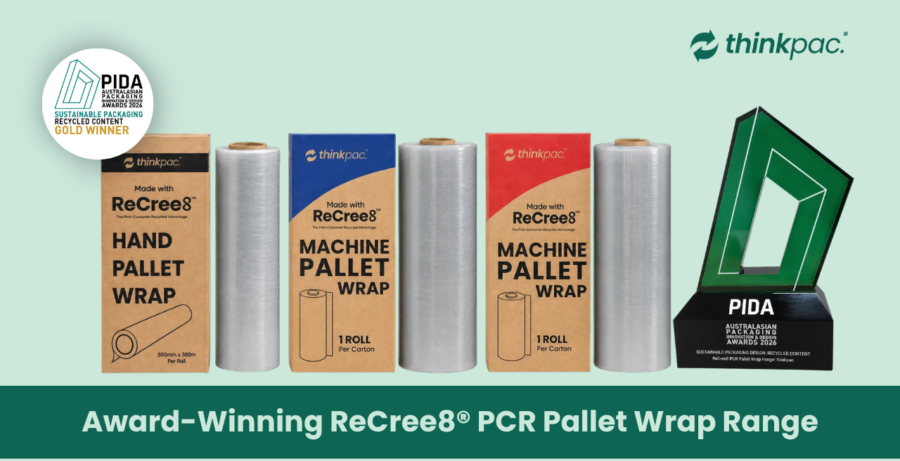
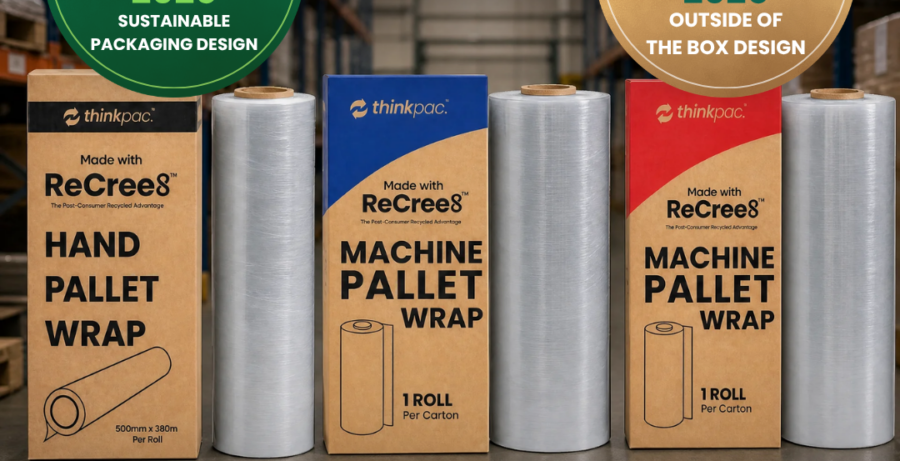
At thinkpac, we support businesses with certified PCR packaging solutions, including bin liners, pallet wrap and flexible packaging products.
Our ReCree8® platform helps provide transparent impact data, recycled content information and practical support for organisations looking to reduce virgin plastic use.
Verified recycled content
PCR content supports traceability and reduces reliance on virgin plastic.
Impact data support
ReCree8® impact data helps support sustainability and procurement reporting.
Practical product range
Our range includes bin liners, pallet wrap, gloves and packaging consumables.
Circular packaging focus
Our goal is to help businesses choose packaging that performs in real operations.
Learn more about ReCree8® resin or explore our bin liners and garbage bags.
Choose Verified Sustainability Over Trendy Labels
In an eco-conscious marketplace, packaging decisions carry real weight. By evaluating suppliers across recycled content, certification, environmental impact, recyclability and ESG alignment, businesses can avoid greenwashing and make stronger procurement choices.
The best sustainable packaging decisions are based on proof. When you choose verified PCR packaging, you are not just buying a product. You are supporting a more circular and lower-waste future.
Ready to verify your impact?
See the Difference with ReCree8®
Use the ReCree8® Impact Calculator to estimate emissions, water and energy savings from switching to PCR packaging.