thinkpac ReCircle soft plastic recycling initiative Australia

thinkpac Joins $7.6M Federal Government-Backed ReCircle Initiative to Close the Soft Plastic Loop

The Commonwealth Government has approved a $3 million CRC-P (Cooperative Research Centres Project) grant for ReCircle — a $7.6 million collaborative initiative to advance soft plastic recycling in Australia by building autonomous, on-site recycling units for the country’s largest warehouses, distribution centres, and manufacturers

thinkpac is a named commercialisation partner in the project.

This post explains what the project does, what our role is, and why the commercial end of the supply chain matters as much as the technology.

The Problem With Soft Plastic Recycling in Australia

Australia consumes roughly 433,000 tonnes of LDPE (soft plastic) annually. Approximately 359,000 tonnes ends up in landfill — a recycling rate of just 16.2%.

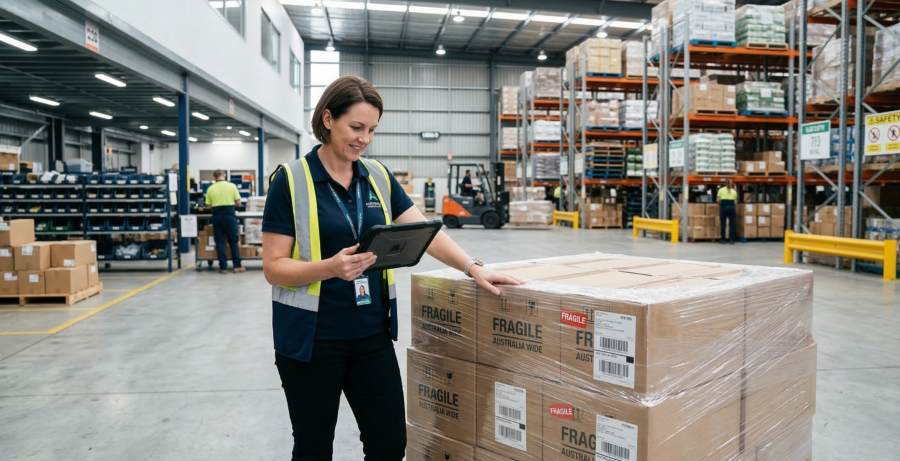
The reasons are structural, not motivational. Large distribution centres can generate up to six tonnes of LDPE shrink wrap per week. Most of it goes into general waste. What little does get recycled is collected manually, trucked to centralised facilities, and processed at significant cost – financial and environmental.

The result is a system that is logistically expensive, carbon-intensive, and commercially unattractive. The waste generators bear the cost. There is no return on the material.

ReCircle is designed to change that.

What ReCircle Does

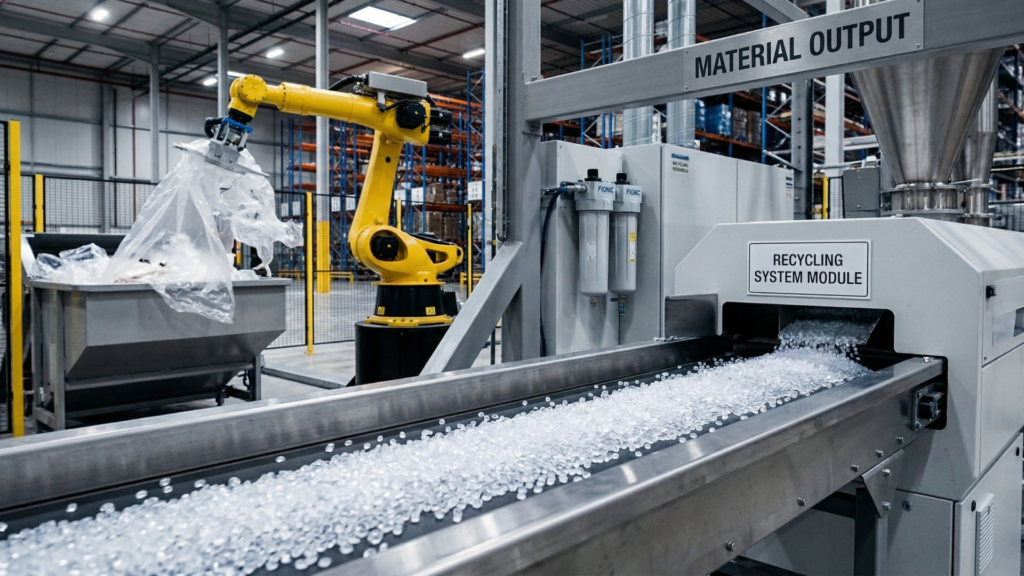
ReCircle installs automated, plug-and-play recycling units directly at the waste generator’s site – at facilities like Amazon, Coles, and IKEA. These units sort, de-volumise, and extrude end of life LDPE shrink wrap into reusable plastic pellets on-site.

The technology integrates KUKA Robotics for material handling, NGR pelletizers for processing, FIMIC filtration for quality output, and an IoT monitoring system that captures recycling activity in real-time — enabling automated ESG reporting for host facilities.

The consortium includes CSIRO for feedstock characterisation and product evaluation, and RMIT University for mechatronics and equipment integration. Industry partners include Sydney City Rubbish, ANPC, Sealed Air, and Essity.

The $7.6 million project runs over three years, commencing in 2026.

Where thinkpac Comes In

Recycling technology alone does not create a circular economy. It creates pellets.

For those pellets to have value – real, commercial value – there needs to be a buyer with the manufacturing capability and market access to turn raw recycled material into a finished product that someone will pay for.

That is our role.

thinkpac has joined the ReCircle project as the commercialisation and manufacturing partner. Specifically, we are responsible for:
• Defining the target specifications for the recycled pellets – working with CSIRO and the consortium to ensure the output is commercially usable, not just technically recyclable
• Manufacturing the finished product – converting ReCircle’s recycled LDPE into functional packaging products
• Creating the end market — distributing the finished PCR packaging back into the same industrial supply chains that generated the waste in the first place

The loop is intentional. Waste comes from distribution centres. It gets recycled on-site. We convert it into packaging. That packaging goes back into the same logistics and warehousing sector that produced the original waste.

This is not a pilot programme. It is a designed commercial supply chain.

Why This Matters for PCR Packaging Buyers

If you are a business currently buying packaging – or evaluating a move to PCR products – the ReCircle project matters for soft plastic recycling in Australia for one specific reason: it expands the quality and volume of domestically-processed recycled resin available in Australia.

Right now, the global PCR resin market is constrained. Quality LDPE waste material that has been properly sorted, filtered, and pelletised to a usable specification is not in surplus. Most of what is available is heavily import-dependent.

ReCircle addresses this at the source – by capturing clean, mono-material LDPE waste before it enters the general waste stream and processing it into usable pellets. That is a better input material than post-consumer household soft plastic, and the result shows in the final product.

For thinkpac customers, this strengthens the long-term integrity of our ReCree8® supply chain and our ability to provide packaging with defensible recycled content claims – backed by independent certification, not just marketing language.

A Note on How We Think About Circularity

There is a version of the circular economy that is about storytelling. Brands photograph soft plastic collection bins, publish sustainability reports, and move on.

There is another version that is about building a commercial system that actually works.

The difference is whether recycled material has a market. Technology that collects and sorts soft plastics is genuinely useful. But it is only the first half of the equation. If the output has nowhere to go – or if the quality does not meet the standards of a real manufacturing process – the material ends up in secondary waste streams or stockpiled.

thinkpac’s involvement in ReCircle is grounded in that second version. Our contribution is commercial infrastructure: market knowledge, product development capability, and a distribution network that can absorb and sell the output at scale.

Recycling that cannot be commercialised is not a circular economy. It is cost-shifted waste management.

What Comes Next

The project is in the agreement phase, with R&D and implementation commencing in 2026. Over the three-year programme, the consortium will build, test, and refine the on-site recycling units at pilot facilities before broader rollout.

thinkpac will work in parallel to develop the finished product formats that make best use of the recycled LDPE output – starting with products already within our ReCree8® range.

We will provide updates on the project as it develops.

About ReCree8® by thinkpac

ReCree8® is thinkpac’s branded post-consumer recycled resin, used across our range of soft plastic packaging products. Products made with ReCree8® resin are manufactured to commercial performance standards and backed by independent third-party certification. thinkpac supplies PCR packaging to businesses across the cleaning, hospitality, food processing, and logistics sectors from our Melbourne distribution centre.

To discuss PCR packaging options for your business, contact the thinkpac team at info@thinkpac.com.au

thinkpac is a Melbourne-based wholesale distributor of post-consumer recycled soft plastic packaging. Our ReCree8® resin brand is independently verified by GECA. We supply businesses across Australia.

Share This

Related Posts