Sustainable Packaging Guide
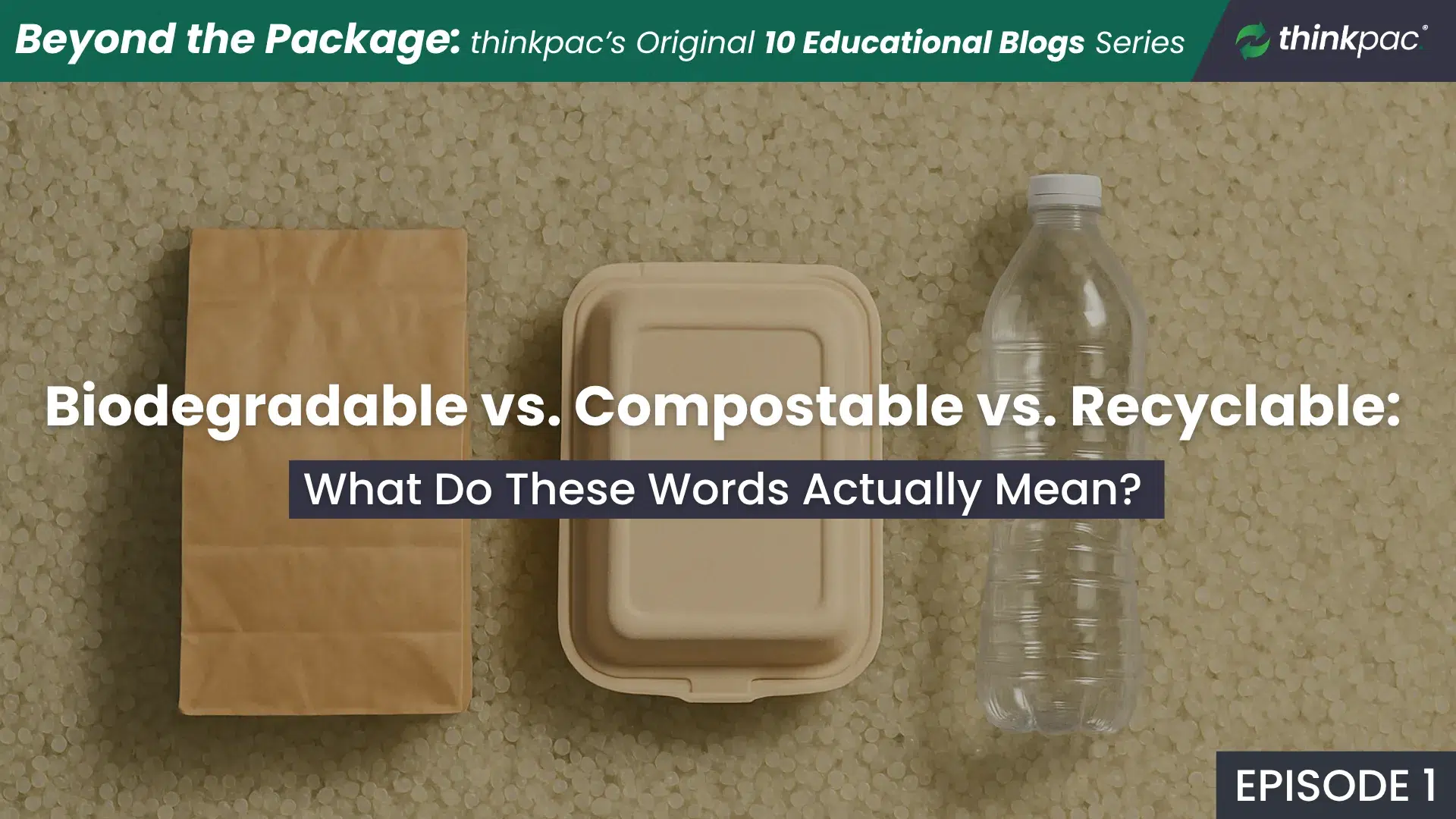
Biodegradable vs Compostable vs Recyclable Packaging: The Ultimate Guide
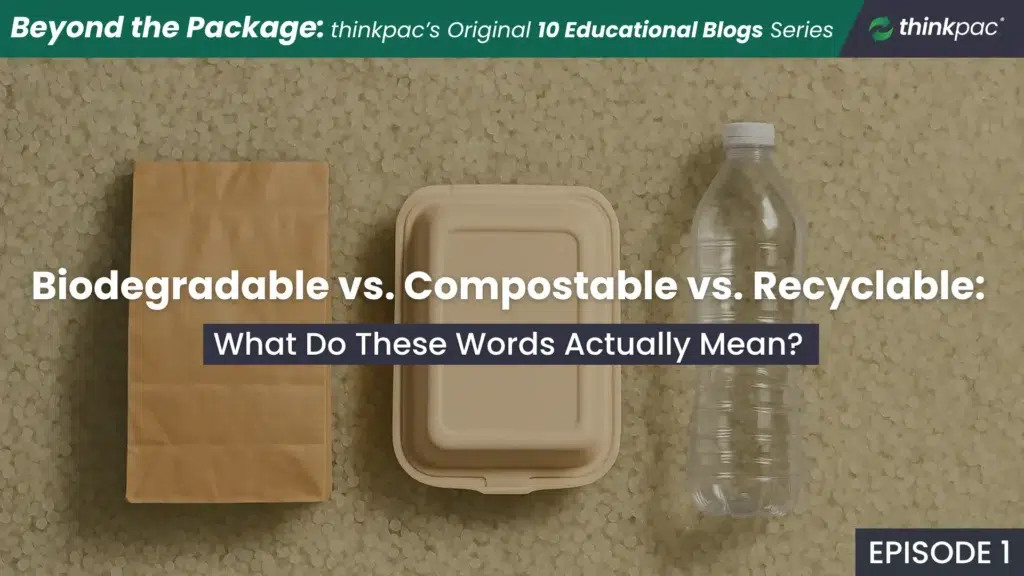
Biodegradable compostable recyclable packaging terms often sound similar. However, each one works in a different way and needs different disposal conditions.
Today, many businesses want packaging that reduces waste and avoids greenwashing. Therefore, it is important to understand what these labels really mean before choosing a product.
Biodegradable, Compostable and Recyclable Packaging Explained
The best packaging choice depends on the material, the disposal system and the proof behind the claim. For example, biodegradable packaging may break down over time, while compostable packaging needs the right composting conditions.
Recyclable packaging also depends on local collection and recycling systems. As a result, businesses should not rely on broad labels alone. Instead, they should look for clear instructions, strong certification and simple environmental data.
Biodegradable
Breaks down over time, but timing and residue can vary.
Compostable
Breaks down into compost under set conditions and standards.
Recyclable
Can become new products when local systems accept it.
What Does Biodegradable Packaging Really Mean?
Biodegradable materials break down through natural action over time. They may turn into water, biomass and carbon dioxide. However, the result depends on heat, moisture, oxygen and the type of material.
Some biodegradable packaging may still take years to break down. In addition, certain materials can leave small plastic pieces behind if they do not break down properly.
Benefits of biodegradable options
- They may reduce visible litter over time.
- They can break down in the right environment.
- They may support better waste outcomes when used correctly.
Watch-outs for biodegradable claims
- Breakdown may take years or even decades.
- Some claims do not include clear proof.
- Landfill conditions may limit the benefit.
What Does Compostable Packaging Mean?
Compostable packaging breaks down into compost under specific conditions. It should leave no harmful residue when it meets the right standard.
This is where compostable differs from biodegradable. All certified compostable items are biodegradable. However, not all biodegradable items meet compostable standards.
Home compostable
Home compostable packaging is made for backyard compost bins. Even so, it still needs the right heat, moisture and organic matter.
Commercially compostable
Commercially compostable packaging usually needs an industrial composting facility with controlled heat, air and moisture.
For stronger proof, look for recognised standards such as AS 4736 in Australia or EN 13432 in Europe. These standards help reduce vague claims.
What Does Recyclable Packaging Mean?
Recyclable packaging can be collected, processed and made into new products. This helps reduce the need for new raw materials.
Still, recyclable does not always mean recycled. A product needs the right collection system, suitable recycling equipment and low contamination to complete the process.
Benefits of recyclable packaging
- It helps save resources.
- It can use less energy than making new materials.
- It often works with kerbside or community systems.
Watch-outs for recyclable claims
- Mixed materials may be hard to process.
- Food or liquid contamination can cause rejection.
- Some plastics lose quality after several recycling cycles.
Post-Consumer Recycled Packaging: The Circular Champion
Biodegradable, compostable and recyclable packaging can each play a role. However, verified post-consumer recycled packaging gives many businesses a clear and measurable way to reduce virgin plastic use.
PCR packaging uses material that people have already used and discarded. This can include bottles, containers, bags and other recovered plastics. After collection, the material is sorted, washed and made into new packaging products.
♻️
Diverts waste
Helps keep plastic out of landfill and oceans.
🌱
Cuts virgin plastic
Reduces demand for new fossil fuel-based plastic.
📊
Supports reporting
Provides clearer data for ESG and procurement decisions.
🔄
Builds circularity
Keeps material in use for longer.
Comparing Biodegradable, Compostable, Recyclable and PCR Packaging
The table below shows why biodegradable compostable recyclable packaging decisions need more than a simple label. In short, you need to check the disposal pathway, proof and real circular value.
| Feature | Biodegradable | Compostable | Recyclable | PCR Packaging |
|---|---|---|---|---|
| End-of-life | Soil, water or landfill | Home or industrial compost | Recycling facilities | Recycling and reuse |
| Timeframe | Months to decades | Weeks to months | Depends on collection | Recycled into new products |
| Certification | Often limited | AS 4736 or EN 13432 | Resin codes and labels | Verified PCR standards |
| Contamination risk | Possible microplastics | Can contaminate recycling | Rejected if contaminated | Lower with verified process |
| Circular economy support | Low to medium | Medium | Medium | High |
Practical Tips for Choosing Sustainable Packaging Materials
Before choosing packaging, check whether the material suits your product, your customers and the disposal systems in your market.
Assess your supply chain
Check access to commercial composting, kerbside recycling, community recycling or return programs.
Verify every claim
Ask for certified compostable, home compostable or PCR-certified documents.
Avoid mixed materials
Packaging with foil, paper and plastic layers can be hard to separate and recycle.
Give clear disposal instructions
Use simple labels such as place in recycling bin, home compost only or return through a collection program.
Biodegradable vs Compostable vs Recyclable Packaging FAQs
What is the difference between biodegradable, compostable and recyclable?
Biodegradable items break down over time. Compostable items turn into compost under the right conditions. Recyclable items can become new products when local systems accept them.
Can something be both compostable and biodegradable?
Yes. Compostable items are biodegradable. However, they must meet stricter rules and leave no harmful residue.
Is compostable packaging better than recyclable packaging?
It depends on local systems. Compostable packaging works best where composting facilities exist. Otherwise, recyclable packaging or verified PCR packaging may be more practical.
What is the difference between industrial composting and home composting?
Industrial composting uses controlled heat, moisture and air. Home composting usually works at lower temperatures and may take longer.
Learn More About Packaging Claims and Standards
To better understand environmental claims and reduce greenwashing risk, you can review the
ACCC guidance on environmental claims.
You can also visit the
Australian Packaging Covenant Organisation
for packaging sustainability information in Australia.
For more support, explore ReCree8® resin, try the
ReCree8® Impact Calculator, or view our
products.
Final Thoughts: Go Beyond Sustainable Packaging Buzzwords
When choosing packaging, avoid claims that sound good but lack proof. Instead, look for clear data about disposal, certification, emissions and local infrastructure.
Biodegradable compostable recyclable packaging choices can all help in different ways. However, verified PCR packaging gives many businesses a practical way to cut virgin plastic use and support a circular economy.
At thinkpac, we support packaging solutions that are practical, measurable and built for real-world use.
Next steps
Choose Packaging With Verified Impact
Explore thinkpac’s growing range of PCR verified products, designed to meet performance needs and genuine sustainability goals.